How to Choose the Perfect Resin Pooja Thali: Ultimate Buyer’s Guide
Did you know that over 80% of modern Indian households now prefer resin pooja thalis over traditional materials?
There’s a good reason for this shift!
Choosing the right pooja thali is more than just picking a pretty design.
It’s about finding a sacred vessel that enhances your spiritual practice while fitting seamlessly into your daily worship routine.
Whether you’re setting up your first home temple or upgrading your existing pooja setup, resin thalis offer the perfect blend of beauty, durability, and affordability that traditional materials often can’t match.
With hundreds of options flooding the market, how do you separate the exceptional from the ordinary?
From intricate Ganesha designs to minimalist geometric patterns, from pocket-friendly options to premium collections, the choices can feel overwhelming.
That’s exactly why I’ve created this comprehensive guide to help you make an informed decision that you’ll cherish for years to come.
Jump to the Topic
Understanding Resin Pooja Thalis: Why They’re Taking Over Traditional Options
What Makes Resin the Modern Choice
Resin pooja thalis are crafted from high-quality synthetic polymers that can be molded into intricate designs while maintaining exceptional durability.
Unlike traditional materials, resin allows manufacturers to create detailed motifs, vibrant colors, and complex patterns that would be impossible or extremely expensive to achieve in brass or silver.
The manufacturing process involves mixing liquid resin with pigments and hardeners, then pouring the mixture into detailed molds.
This process allows for consistent quality, precise detailing, and the ability to incorporate multiple colors in a single piece.
Advantages Over Traditional Materials
Durability: Resin thalis resist tarnishing, corrosion, and everyday wear far better than brass or copper alternatives. They won’t develop the green patina that brass items often acquire over time, and they’re virtually immune to the effects of moisture and humidity.
Maintenance: While brass thalis require regular polishing with specialized cleaners, resin thalis need only simple soap and water cleaning. This makes them ideal for daily worship routines where convenience matters.
Cost-Effectiveness: High-quality resin thalis cost significantly less than their silver or brass counterparts while offering superior longevity and aesthetic appeal.
Design Flexibility: Resin allows for intricate detailing, multiple colors, and complex patterns that traditional metalworking simply cannot achieve at reasonable prices.
Spiritual Significance and Modern Materials
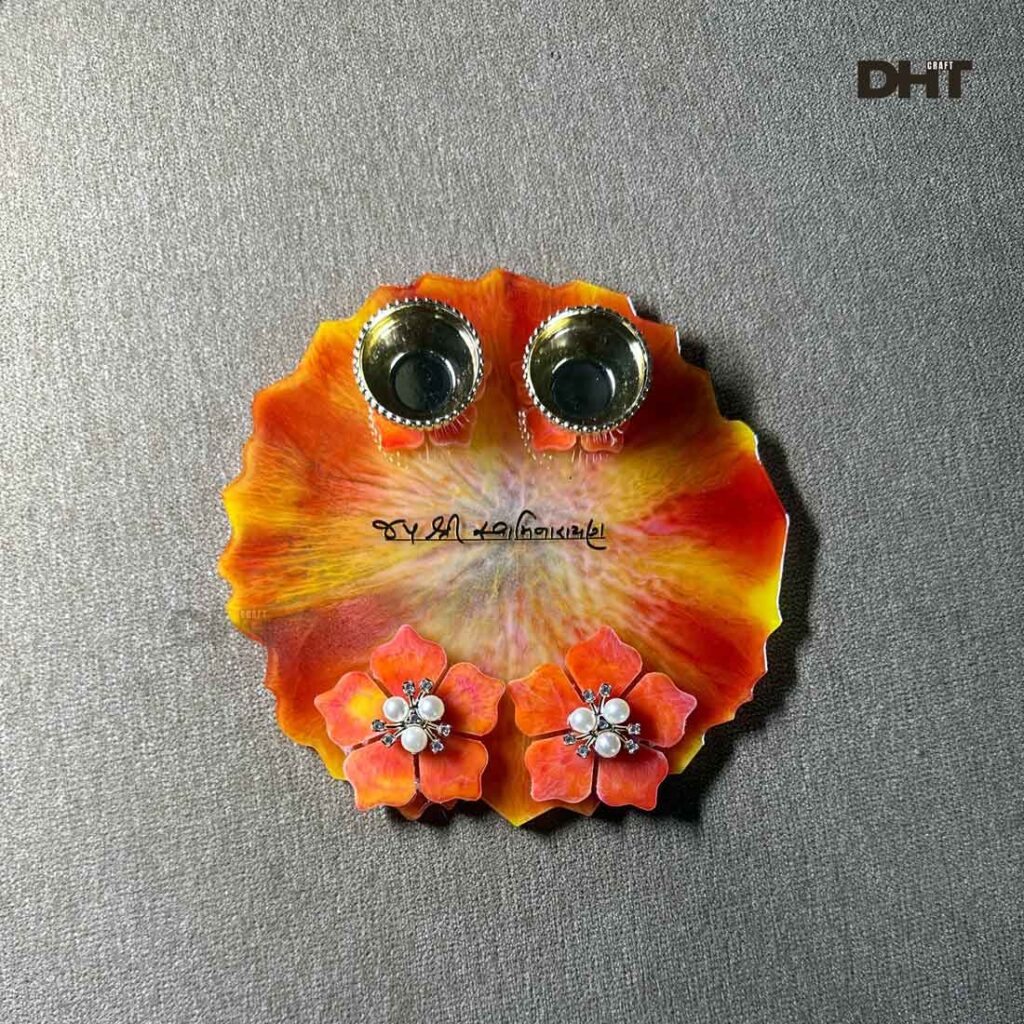
Many devotees initially worry about using “modern” materials for sacred purposes.
However, it’s important to remember that the spiritual significance of a pooja thali comes from the devotion and intention behind its use, not solely from its material composition.
Resin thalis have been blessed and used in temples across India for over two decades.
Many renowned spiritual leaders have embraced these modern alternatives, recognizing that accessibility and practicality can enhance rather than diminish one’s spiritual practice.
Environmental Considerations
Modern resin manufacturing has evolved to include eco-friendly options. Many manufacturers now use bio-based resins derived from plant materials, reducing environmental impact while maintaining all the benefits of traditional resin.
When choosing your thali, look for manufacturers who mention sustainable practices or eco-friendly materials in their product descriptions.
Essential Features to Look for in a Quality Resin Pooja Thali
Material Quality Indicators
Thickness and Weight: A quality resin thali should have substantial weight and thickness. Thin, lightweight thalis are often made from inferior materials that may crack or break easily.
Surface Consistency: Run your fingers across the surface. Quality resin should feel smooth and consistent without rough patches, air bubbles, or uneven textures.
Color Depth: Premium resin thalis have rich, deep colors that appear to be embedded within the material rather than simply painted on top.
Edge Finishing: Examine the edges carefully. Quality pieces have smooth, well-finished edges without sharp points or rough areas that could cause injury.
Surface Finish and Texture Options
Glossy Finish: Provides a mirror-like appearance that’s easy to clean and maintain. However, it may show water spots and fingerprints more readily.
Matte Finish: Offers a sophisticated, understated look that hides minor scratches and water spots better than glossy finishes.
Textured Surfaces: Some thalis feature deliberately textured areas that add visual interest and provide better grip when handling.
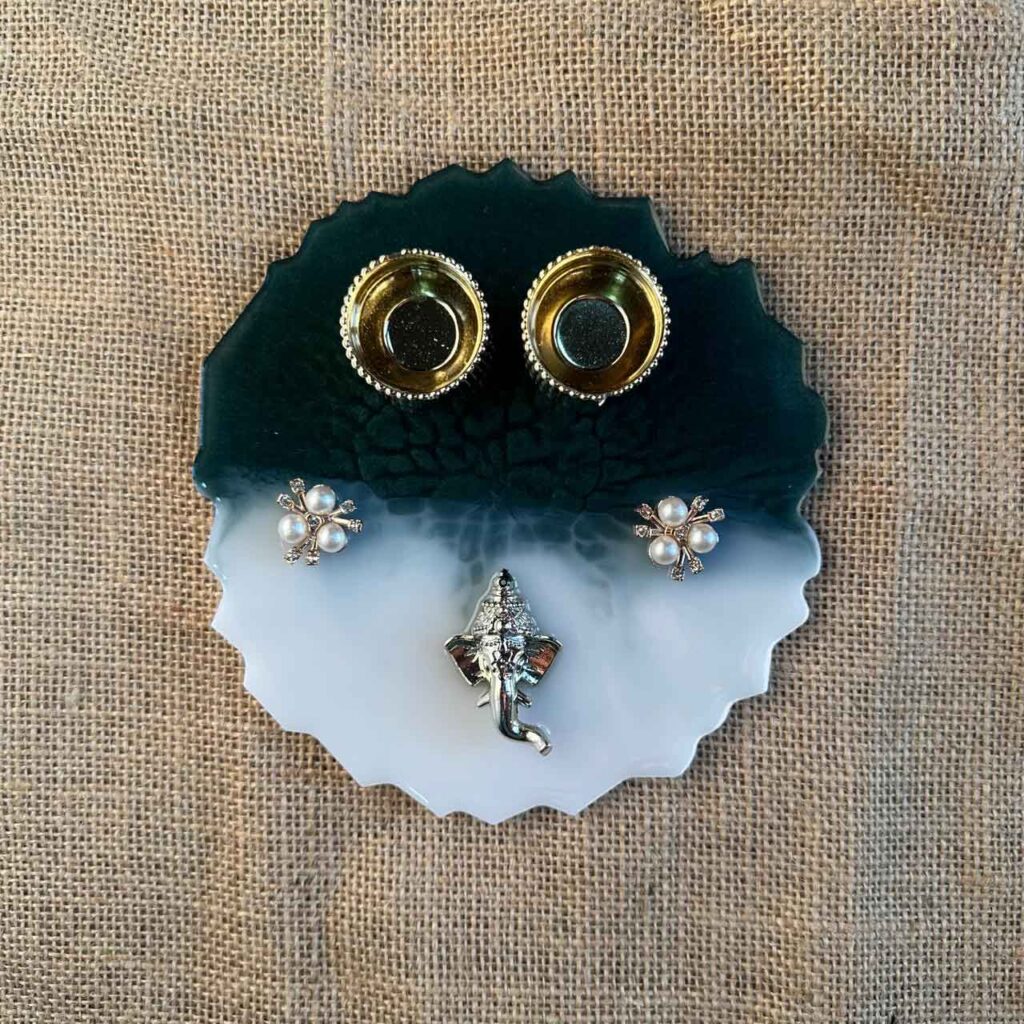
Weight and Thickness Guidelines
A quality 10-inch resin pooja thali should weigh between 300-500 grams. Anything significantly lighter may indicate inferior materials or construction. The base should be at least 3-4mm thick for adequate durability.
Color Fastness Testing
Before purchasing, ask about UV resistance and color fastness. Quality manufacturers will guarantee their colors won’t fade for at least 3-5 years under normal use conditions.
Size and Design Considerations for Your Worship Space
Standard Size Categories
Small Thalis (6-8 inches): Perfect for personal worship, small pooja rooms, or travel. These compact thalis are ideal for daily rituals and can accommodate essential items like a diya, incense holder, and small bowls for offerings.
Medium Thalis (9-12 inches): The most popular size for home worship. These offer enough space for all essential items while fitting comfortably in most pooja rooms or dedicated worship spaces.
Large Thalis (13+ inches): Best suited for family worship, special occasions, or larger pooja rooms. These provide ample space for elaborate rituals and multiple offerings.
Compartment Layout Options
Multi-Section Design: Features built-in compartments for different items like diyas, incense, flowers, and prasad. This design helps organize your worship items and prevents them from mixing.
Single-Section Design: Provides a flat surface where you can arrange your own bowls and accessories. This offers more flexibility in arranging items according to your preferences.
Hybrid Designs: Combine both approaches with some built-in compartments and open areas for additional items.
Design Theme Selection
Traditional Motifs: Feature classic Indian patterns like paisleys, lotus flowers, and traditional geometric designs. These never go out of style and suit any home decor.
Deity-Specific Designs: Showcase particular deities like Ganesha, Lakshmi, or Saraswati. Choose these if you have a specific deity you worship regularly.
Modern Interpretations: Contemporary designs that blend traditional elements with modern aesthetics. Perfect for modern homes while maintaining spiritual significance.
Color Psychology in Worship
Red and Gold: Associated with prosperity, power, and auspiciousness. Ideal for festivals and special occasions.
White and Silver: Represent purity, peace, and spiritual enlightenment. Perfect for daily worship and meditation.
Blue and Purple: Connect with divine consciousness and spiritual wisdom. Suitable for those seeking deeper spiritual connection.
Green: Symbolizes growth, harmony, and balance. Great for creating a calming worship environment.
Popular Design Styles and Their Significance

Resin Plates
Ganesha Themed Thalis
Ganesha designs are among the most popular choices for resin pooja thalis.
These thalis typically feature the beloved deity in various poses like dancing, sitting, or blessing devotees.
The intricate details possible with resin allow for remarkably lifelike representations.
When to Choose: Ideal for new beginnings, business ventures, or when you want to invoke Ganesha’s blessings for obstacle removal. These thalis are particularly popular during Ganesh Chaturthi, Tilak Rasam and for housewarming ceremonies.
Design Elements: Look for thalis that incorporate Ganesha’s symbols like the mouse, modak, lotus, and his trunk in blessing position.
Lotus and Floral Patterns
Lotus motifs represent spiritual awakening, purity, and the soul’s journey toward enlightenment. Floral patterns add natural beauty and connect your worship space with nature’s sacred geometry.
Spiritual Meaning: The lotus symbolizes rising above worldly attachments while remaining rooted in spiritual practice. These designs are perfect for daily meditation and contemplative worship.
Aesthetic Appeal: Floral patterns work well with any home decor style and create a serene, peaceful atmosphere in your worship space.
Geometric and Mandala Designs
Modern interpretations of sacred geometry, these designs feature intricate patterns that draw the eye inward, supporting meditation and concentration during worship.
Sacred Geometry: These patterns are based on mathematical principles found throughout nature and are believed to resonate with universal harmony.
Modern Appeal: Perfect for contemporary homes and younger devotees who appreciate the intersection of spirituality and modern design.
Regional Style Variations
South Indian Styles: Often feature temple-inspired architecture, Dravidian motifs, and designs reflecting the rich cultural heritage of Tamil Nadu, Karnataka, and Andhra Pradesh.
North Indian Styles: Incorporate Mughal influences, intricate paisley patterns, and designs inspired by the cultural traditions of Rajasthan, Punjab, and Uttar Pradesh.
Bengali Styles: Feature artistic elements inspired by Bengal’s rich cultural heritage, including Durga motifs, fish patterns, and designs reflecting the region’s artistic traditions.
Seasonal and Festival-Specific Designs
Diwali Collections: Feature diyas, fireworks patterns, and prosperity symbols. These thalis often incorporate gold accents and vibrant colors.
Karva Chauth Specials: Designed specifically for married women, featuring moon motifs, traditional patterns, and romantic symbolism.
Navratri Themes: Showcase the nine forms of Goddess Durga with appropriate color schemes for each day of the festival.
Budget Planning: Getting the Best Value for Your Money
Understanding Price Ranges
Budget Range (₹200-500): Entry-level thalis suitable for basic worship needs. These typically feature simpler designs, fewer color variations, and standard resin quality. While functional, they may not have the durability or aesthetic appeal of higher-end options.
Mid-Range (₹500-1500): The sweet spot for most buyers. These thalis offer good quality resin, attractive designs, and reasonable durability. You’ll find better finishing, more intricate patterns, and often some unique design elements.
Premium Range (₹1500+): High-end thalis featuring superior resin quality, exceptional designs, and often hand-finished details. These pieces are built to last decades and often become family heirlooms.
Cost vs. Quality Analysis
What You Get at Each Price Point:
Budget thalis provide basic functionality but may show wear after 2-3 years of regular use. The designs are usually simpler, and color options are limited.
Mid-range options offer the best balance of quality and affordability. They typically last 5-7 years with proper care and feature more sophisticated designs and better finishing.
Premium thalis are investment pieces that can last 10-15 years or more. They often feature unique designs, superior materials, and exceptional craftsmanship.
Where to Buy
Online Marketplaces: Platforms like Amazon, Flipkart, and specialized spiritual goods websites like DHT Craft offer the widest selection and competitive prices. However, you can’t physically examine the product before purchase.
Local Stores: Religious goods stores and handicraft shops allow you to see and feel the product before buying. You can also negotiate prices and get immediate possession.
Specialty Retailers: Stores specializing in pooja items often have knowledgeable staff who can provide expert advice and may offer customization options.
Seasonal Discount Strategies
Best Times to Buy: Major savings are typically available during Diwali, Dussehra, and other major festivals when retailers offer significant discounts.
Off-Season Purchases: Buying during non-festival periods often yields better prices and more personalized service.
Bulk Buying: If you’re purchasing for multiple family members or as gifts, many retailers offer bulk discounts.
Maintenance and Care Tips for Long-Lasting Beauty
Daily Cleaning Routine
Immediate Cleaning: After each use, wipe the thali with a soft, damp cloth to remove any oil, turmeric, or other worship materials. This prevents staining and makes deep cleaning easier.
Weekly Deep Clean: Once a week, wash the thali with mild soap and warm water. Use a soft brush to clean intricate design details where dust might accumulate.
Drying: Always dry the thali completely before storing to prevent water spots and potential mold growth in humid climates.
Stain Removal Techniques
Turmeric Stains: Mix baking soda with lemon juice to create a paste. Apply to the stain, let sit for 15 minutes, then scrub gently with a soft brush.
Oil Stains: Dish soap designed to cut grease works well. Apply directly to the stain, let sit for 10 minutes, then wash with warm water.
Stubborn Stains: For persistent stains, create a paste with baking soda and water. Apply and let sit overnight, then scrub gently and rinse.
Storage Guidelines
Avoid Direct Sunlight: Store your thali in a cool, dry place away from direct sunlight to prevent color fading and potential warping.
Use Protective Covering: Cover with a soft cloth when not in use to prevent dust accumulation and protect from accidental scratches.
Stack Carefully: If storing multiple thalis, place soft cloth between them to prevent scratching.
Repair Options
Minor Scratches: Light scratches can often be polished out using automotive plastic polish or specialized resin cleaners.
Small Chips: Some chips can be repaired using clear nail polish or specialized resin repair kits, though this requires careful application.
When to Replace: If the thali has major cracks, significant color fading, or damage that affects its functionality, it’s time to invest in a new one.
Top Brands and Where to Buy Quality Resin Pooja Thalis
Trusted Manufacturers
Established Brands: Companies like Craftsman, Indian Art Villa, and Hashcart have built reputations for quality resin spiritual items over many years.
Artisan Collectives: Many skilled artisans now sell directly through platforms like Etsy, Instagram, and specialized craft websites, offering unique, handcrafted pieces.
Regional Specialists: Some manufacturers specialize in specific regional styles or particular types of spiritual items, offering deeper expertise in their niche.
Online Shopping Tips
Reading Reviews: Look for reviews that specifically mention durability, color fastness, and overall satisfaction after months of use, not just initial impressions.
Return Policies: Ensure the seller offers at least a 15-day return policy in case the thali arrives damaged or doesn’t meet your expectations.
Authenticity Verification: Be wary of extremely low prices that seem too good to be true. Check seller ratings and read multiple reviews before purchasing.
Quality Certifications
ISO Standards: Some manufacturers highlight ISO certification, indicating adherence to international quality standards.
Food-Safe Materials: If you plan to place food offerings directly on the thali, look for food-safe certification.
Environmental Certifications: Some manufacturers now offer eco-friendly certifications for their sustainable manufacturing practices.
Warranty and Customer Service
Warranty Coverage: Premium brands often offer 1-2 year warranties against manufacturing defects.
Customer Support: Choose sellers who provide responsive customer service and are willing to address concerns promptly.
Replacement Policies: Some sellers offer replacement guarantees if the product arrives damaged or fails to meet quality expectations.
Common Mistakes to Avoid When Buying
Size Miscalculations
Measuring Your Space: Before purchasing, measure your pooja room or worship area to ensure the thali will fit comfortably without overcrowding the space.
Considering Daily Use: Think about how you’ll use the thali daily. A thali that’s too large for your regular worship routine may end up being used only for special occasions.
Storage Considerations: Ensure you have adequate storage space for the thali when not in use.
Ignoring Material Quality
Cheap vs. Quality Resin: Don’t be swayed by extremely low prices. Very cheap resin thalis often crack easily, fade quickly, or may even contain harmful chemicals.
Thickness Matters: Thin thalis are more prone to cracking and breaking. Always check the thickness and weight specifications.
Finish Quality: Poor finishing can result in rough edges that may cause injury or make the thali difficult to clean properly.
Overlooking Maintenance Requirements
Understanding Care Needs: Different finishes and designs may have specific care requirements. Ensure you’re prepared to maintain the thali properly.
Cleaning Product Compatibility: Some harsh cleaners can damage resin. Understand what cleaning products are safe to use.
Long-term Durability: Consider whether you’re willing to provide the care needed to maintain the thali’s appearance over time.
Impulse Buying
Research First: Take time to compare different options, read reviews, and understand the features that matter most to you.
Consider Your Needs: Think about how you’ll use the thali and what features are most important for your worship practice.
Budget Properly: Set a realistic budget that allows you to get good quality without overspending.
Forgetting About Accessories
Matching Sets: Consider whether you’ll need matching bowls, lamps, or other accessories to complete your worship setup.
Compatibility: Ensure any existing accessories will work well with your new thali.
Future Needs: Think about whether you might want to expand your collection and choose a thali that will work well with future additions.
Conclusion
Choosing the perfect resin pooja thali doesn’t have to be complicated when you know what to look for.
Remember, the best thali is one that resonates with your spiritual practice while fitting comfortably within your budget and maintenance preferences.
Start by determining your size requirements and preferred design style, then focus on quality indicators like material grade and finish.
Don’t rush the decision; a quality resin pooja thali is an investment in your daily spiritual practice that should serve you faithfully for years to come.
Not Sure Yet? Contact us We will always here to help.